Translated by Jennifer Russell
Daniel found her in the ground. He dug her free and brushed off the dirt. He joined the pieces, logged the pigment traces: how they were distributed across her clothes and her skin.

a journal of research & art
Translated by Jennifer Russell
Daniel found her in the ground. He dug her free and brushed off the dirt. He joined the pieces, logged the pigment traces: how they were distributed across her clothes and her skin.
By Alexis Morgan
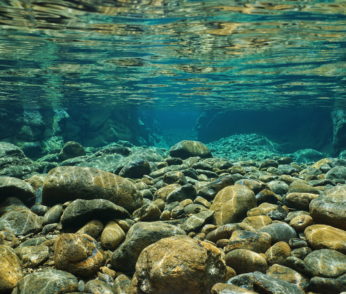
Civilization was founded on the presence of water. The two cradles of civilization—the Nile Valley and the region between the Tigris and Euphrates rivers—were established around fertile river valleys that brought both the rewards of rich soils for agriculture, and perversely, the risks associated with the nutrient-laden flood waters.
By Fernando Mercé
Today, there are approximately 4 billion people living in regions where the water supply is woefully inadequate. With about 663 million people without safe drinking water, scarcity has become a very real and complex challenge. Additionally, UNESCO estimates that by 2025, 1.8 billion people will be living in countries or regions with severe water scarcity, and two-thirds of the world population could fall under “water stress” conditions from increased demand and the impacts of climate change.

Interviewed by Peter Debaere
The appropriation and transfer of virtual water can also be associated with the acquisition of agricultural land instead of “just” crops.
By Geoffrey M. Geise
Within the next decade, water shortages are projected to affect 40 US states and effectively all Americans. The issue of water accessibility is not one limited to the US, however, as the problem of clean water availability has become more widely recognized in recent years. For example, the US National Academy of Engineering has recognized the urgent need to provide access to clean water as one of the “Grand Challenges for Engineering
By Monica Garcia Quesada and David Aubin
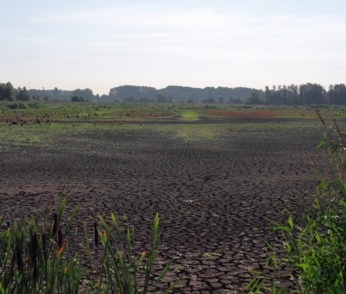
2018 has seen the hottest and driest summer in Western Europe since records began. This prolonged heat and dryness has touched areas in England, the Netherlands, Belgium, and France amongst others, affecting farms and forests, threating agricultural output, pasture, and feed supply.
Translated by Peter Bachev
If she just looks long and hard enough through the grimy pane of the southern window, she is sure to see one of them returning to its nest. That’s what she’s been told…
By EuropeNow Editors
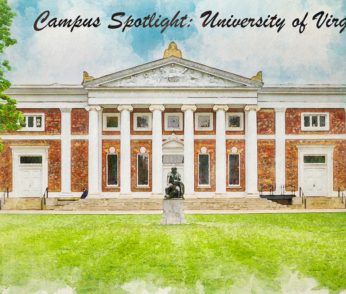
In this issue of EuropeNow Campus, we feature a spotlight on the Global Water Initiative at the University of Virginia.
By Ralf B. Schäfer, Mira Kattwinkel, and Elisabeth Berger
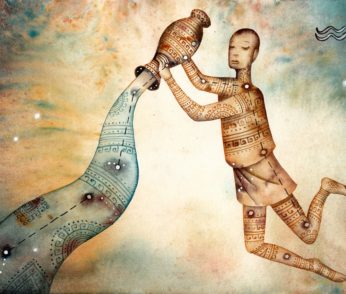
Water has always been essential for human societies providing ecosystem services, such as drinking water, crop production through irrigation water, food, climate regulation, and recreation. The German sociologist Karl Wittfogel went so far as to suggest a connection between water and the evolution of the state, the so-called “hydraulic societies.” Today, water management is a key sector of environmental policy in Europe, and arguably the environmental sector with the highest aspirations.