By Rachel A Cohen and Catherine Butterly
Violence against women and girls is a ubiquitous and pervasive problem, affecting about one in three women worldwide. The psychological, social, medical, and economic consequences are deep and enduring.

a journal of research & art
By Rachel A Cohen and Catherine Butterly
Violence against women and girls is a ubiquitous and pervasive problem, affecting about one in three women worldwide. The psychological, social, medical, and economic consequences are deep and enduring.

By the EuropeNow Editorial Committee
Here are this month’s editor’s picks from Research Editorial Committee members Nick Ostrum and Hélène B. Ducros.

By Lauri Tähtinen
As of late April, eighteen of the twenty-six member countries of the Schengen Area were conducting internal border checks. In May, European Union institutions awoke to the need to “reopen” Europe before summer, the high season for the tourism industry which has been responsible for one tenth of Europe’s GDP.

By Răzvan-Victor Sassu and Eliza Vaș
The new coronavirus has drastically reshuffled both economies and societies in the past months. The International Monetary Fund (IMF) has described the situation as being a “crisis like no other” with “an uncertain recovery” and a “catastrophic hit” to the global labour market, with more than 430 million jobs losses in the first two quarters.

Reviewed by Mohamed Amine Brahimi
Nadia Kiwan’s Secularism, Islam and Public Intellectuals in Contemporary France, addresses a topic that receives little attention in the social sciences: the position of Muslim intellectuals in France and their relationship to secularism.

Translated by David Colmer
The one who is addressing you here / is not the one who is writing this / the one who is writing this / not the one who is.

By Angela Cacciarru and Antonio Paesano
There are many factors intervening in a society’s ability to combat disease. While Italy was featured everywhere in global media as the place where COVID-19 was out of control and the situation desperately stark, the spreading of the virus was showing more and more its uneven impact.

By Ruxandra Paul
Migrants have always been both essential to modern economies and objects of suspicion, but the Coronavirus pandemic has brought this tension to a head both in migrant-sending and migrant-receiving countries.
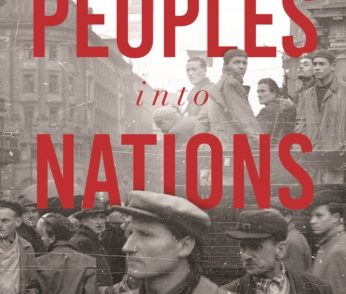
Reviewed by Alec Medine
Covers the history of Eastern and Central European nationalities from their inception as imperial subject-peoples in the 18th century.