Translated by Ghjulia Romiti
I wander through paris, empty / of our laughter of our frenzy / absent from our absence / the spring sun / shines uselessly / stripped of our meanderings / of the lovers’ kisses

a journal of research & art
Translated by Ghjulia Romiti
I wander through paris, empty / of our laughter of our frenzy / absent from our absence / the spring sun / shines uselessly / stripped of our meanderings / of the lovers’ kisses

Reviewed by Emily Meneghin
The book analyzes five films and references even more academic disciplines, including history, industrial economics, oral memoir, acoustics, environmentalism, chemistry, geology, socio-economic politics, culinary studies, and more.

By Eda Derhemi
For thousands of years the Mediterranean Sea has been a place where important civilizations have met and where cultures and languages have intermingled and competed.

By Cristina Blanco Sío-López
This article aims to examine the origins and evolution of the dichotomy between liberty and security in the European integration process by focusing on the case of the historical construction of the EU’s Free Movement of Persons (FMP).

By the EuropeNow Editorial Committee
Here are this month’s editor’s picks from Research Editorial Committee members Nick Ostrum and Hélène B. Ducros.

By Niloofar Sarlati
The global pandemic has simultaneously made visible and intensified longstanding economic and social inequalities across the world. Ethnic, religious, and racial minorities, people with disabilities, and the poor have been suffering at a much higher mortality rate and a more dreadful death. The murders of George Floyd, Breonna Taylor, and Ahmaud Arbery have once again brought to light the systemic anti-black racism.

Interviewed by Juliane Mendelsohn
It can take a long time, if one is brought up in a place foreign to one’s artistic sensibilities to discover other artists that speak your language.
By Emanuel Rota
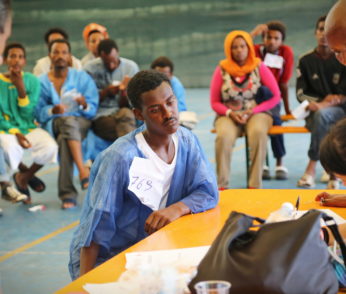
The American experience of the Age of Mass Migration in the first two decades of the twentieth century teaches us that, despite the documentable economic benefits for the host country, nativist politicians are very effective in mobilizing sectors of the local populations against newcomers.

By Cătălin-Gabriel Done
Between Romania and Hungary, for one hundred years, historical issues have impeded the development of consistent bilateral relations, even if the bilateral relations have the character of a “strategic partnership for twenty-first-century Europe.”