By the EuropeNow Editorial Committee
Here are this month’s editor’s picks from Research Editorial Committee members Hélène B. Ducros and Louie Dean Valencia-García.

a journal of research & art
By the EuropeNow Editorial Committee
Here are this month’s editor’s picks from Research Editorial Committee members Hélène B. Ducros and Louie Dean Valencia-García.
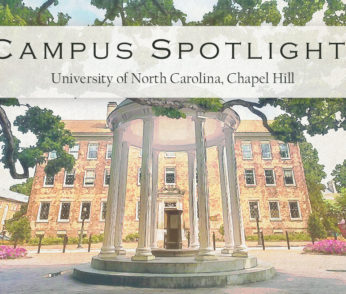
By Hélène B. Ducros
In this issue of EuropeNow Campus, we feature a spotlight on the University of North Carolina at Chapel Hill.
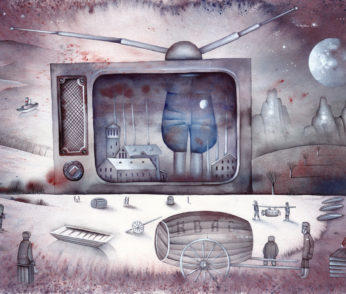
By Josh Lepawsky
Concerns over how to handle discarded electronics as a waste stream have been growing over nearly two decades in Europe.
By Willi Haas
When I visit my childhood neighborhood, I hardly recognize it. Empty spaces have been filled; what was once, in the seventies, a one-storied building, is now multileveled. Even a sky-scrapper has risen.
Interviewed by Hélène B. Ducros
We tend to think that modernity and progress allow us to resolve issues of waste through technology and increased efficiency.

By Megan Blake
Global estimates suggest that approximately one third of all food that is produced is wasted. Alongside this, a myriad of concerns, not least a concern for people who struggle to access food that is safe and healthy, has given rise to a host of organizations operating across the world that seek to move food that otherwise would be wasted from the commercial supply chain to the not-for-profit sector.
By Tatiana Kasperski
When the Berlin Wall fell in 1989, the countries of the socialist block moved to redefine international alliances and quickly reestablished ties with the members of the EC.

By Esther Dischereit
The words Let the People Rule can be found on an inscription in this city. This slogan, which Andrew Jackson proclaimed a long time ago, earned him the name of “Jackass” from his enemies. Since then, the Democrats are happy to use the image of a donkey in their campaigns.
By James Wilkes and Myra Hird
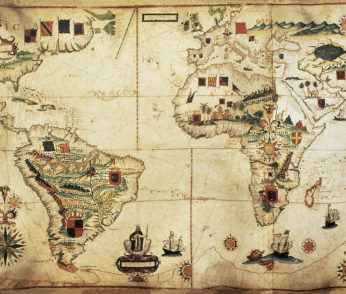
On a global scale, waste, we argue—as material object, as concept, as symbol, and as leitmotif—is a symptom of colonialism, and indeed, cannot be meaningfully understood detached from historical and ongoing forms of colonialism.