By Elisabeth Krimmer
Koppetsch’s analysis links the emergence of extreme-right populist movements and the attendant preference for nationalist over cosmopolitan narratives to a paradigm shift from industrial-national modernity toward globalism.

a journal of research & art
By Elisabeth Krimmer
Koppetsch’s analysis links the emergence of extreme-right populist movements and the attendant preference for nationalist over cosmopolitan narratives to a paradigm shift from industrial-national modernity toward globalism.
By John Pickles
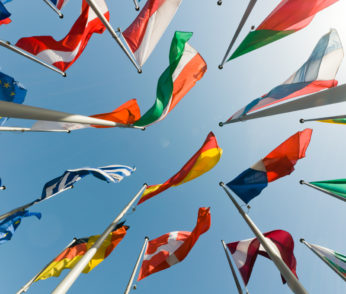
In this course we will focus much of our attention on diverse geographies of Europe and how post-socialism in Central and Eastern Europe, political unification through the European Union, economic globalization, and post-colonial immigration mean for our understanding of Europe Today.

By Nicholas Ostrum
Writing and even reading experimental literature can, in itself, be an act of creative critical analysis. In certain contexts, moreover, it can be an overt act of civic engagement, resistance, and self-realization.

By John Pickles
“Europe Today” is an upper division undergraduate course focused on the processes and patterns of transnational and global Europe, and the ways in which these processes and patterns have reshaped and are reshaping everyday lives, economies, and places across the continent.
By Clara Frysztacka
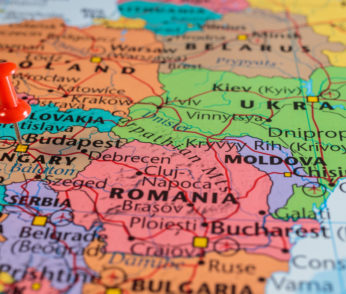
Europe is not only a central reference point for cultural studies at the Europe-University Viadrina and elsewhere, but it is also an omnipresent concept in the press and political debates.

By Clara Frysztacka
“Europe” and “nation” are deeply connected concepts. In historiography, conceptions seeing the seventeenth century as birth moment both for the nation-state and the idea of modern Europe are utterly widespread.

By the EuropeNow Editorial Committee
Here are this month’s editor’s picks from Research Editorial Committee members Louie Dean Valencia-Garcia, and Hélène B. Ducros.

Interviewed by Hélène B. Ducros
Focusing on the role of critical scholars in effecting change.
By Elsa Tulmets
At the University Viadrina, the program strengthens the examination of diversity in French scientific thinking in teaching and research. In doing so, it takes into account the Viadrina’s founding mission to promote European perspectives as a German-Polish university situated at the German-Polish border.