Translated by Mirza Purić
The smell of apple cider vinegar pervades the room, starting from the clean, warm window panes, making its way into the perfectly tightened coverlet on the bed, the freshly brushed carpet, and one suitcase.

a journal of research & art
Translated by Mirza Purić
The smell of apple cider vinegar pervades the room, starting from the clean, warm window panes, making its way into the perfectly tightened coverlet on the bed, the freshly brushed carpet, and one suitcase.

Reviewed by Lauren Stokes
Reading the headlines in the summer of 2015, one might think that migration was a wholly new challenge for Europeans and specifically for Germans. Many of the contributors to this volume are explicit about their desire to intervene in this political culture of historical amnesia and in doing so contribute to what editor Cornelia Wilhelm identifies as “a new, more inclusive understanding of Germanness and of Germany’s role as a destination for immigrants.
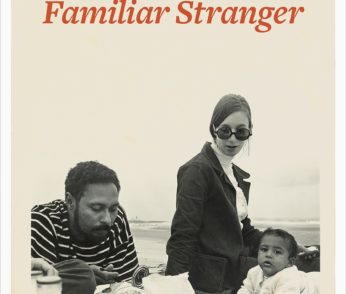
Reviewed by Graeme Turner
The primary task undertaken in Familiar Stranger is one of intensely thoughtful theoretical introspection, an introspection that is directed at understanding the processes of cultural and intellectual self-fashioning that had gone into the formation of one of the most influential intellectuals of his generation.

By Rachael Maddux
At the Pawleys Island General Store, I bought a postcard of a ghost. He stood atop a dune in a wide-brimmed hat and overcoat, one arm raised towards the ocean, his body half-disappeared into the overcast sky. Some stories held that the Gray Man was the ghost of a colonial man who had been thrown from his horse and drowned in the marsh.

Reviewed by Jane Nadel-Klein
Willson’s volume is well-written, mostly clear, and follows an intriguing puzzle: it seems that Icelandic women have a long history of going to sea, but the Icelandic public is largely unaware of this.
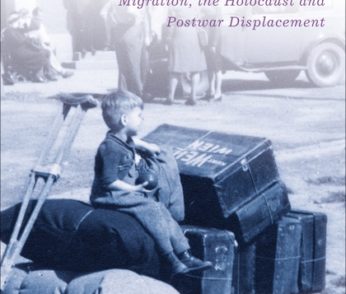
Reviewed by Paula Fass
As the history of children has taken its place among the important fields of inquiry over the past two decades, and as children’s lives provide valuable insights into human experience, it is inevitable that the children brutalized by Nazi Germany should become historical subjects.

Reviewed by Stephanie Maher
Borders are political and economic, material and subjective, hard and soft. By their very nature, borders are gendered, classed, and raced in important ways. Yet, they are also emergent and relational, rather than being fixed and hegemonic.
By the EuropeNow Editorial Committee
Here are this month’s editor’s picks from Research Editorial Committee members Hélène Ducros (Geography), Malcolm Campbell-Verduyn (Political Science), and Lillian Klein (Literature).

Interviewed by Sakeef Karim
Santos explains how Europe and the New World intersect due to contemporary migratory processes and the echoes of the past.