By Inga Ulnicane
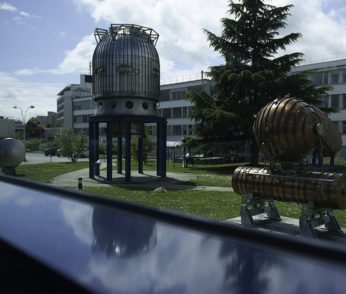
Global research collaboration and competition plays an increasing role in everyday life of contemporary academia.

a journal of research & art
By Inga Ulnicane
Global research collaboration and competition plays an increasing role in everyday life of contemporary academia.
Translated by Chenxin Jiang
Europe is disintegrating, the old lady is falling apart. She recently appeared at the Museum Festival with a terrible heap of jewelry around her neck; she’d just dyed her hair blond; above her fake gold necklace hung her wretched, worn face, and then she laughed, walked up to the bar, embraced a tall young man and kiss him artfully.
By David Constantine
During the funeral, and after it when the mourners came back to her house, Katrin continued in the almost rapturous state she had been lifted into by the last hours of Eric’s life. It was over, accomplished, her strength had sufficed. And now meticulously she would attend in every detail to every thing that needed to be done. She allowed advice, but followed it her way; help, but she directed it. She accepted condolences, and herself extended them to whoever had been saddened by Eric’s death.
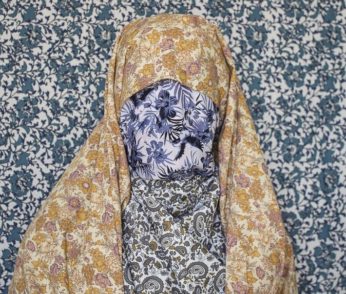
By Alia Ali
The multi-media artist invites the viewer to analyze their subjective perception in regards to inclusion and exclusion, and the threshold in which the transition between the two occurs.
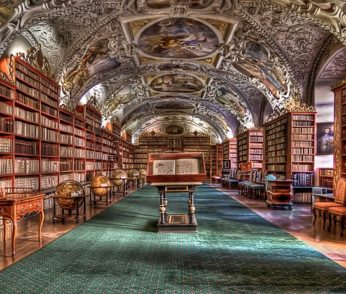
By Inga Ulnicane and Nicola Francesco Dotti
Contributors to this special feature address theoretical and empirical aspects of some of the key transformations: massification of higher education, reforming academic careers, and increased focus on international collaboration and productivity in research.
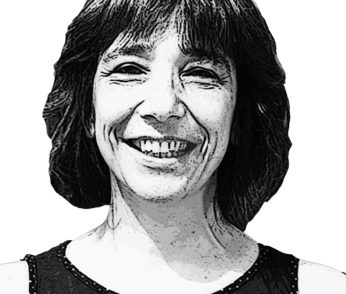
Translated by Julia Sanches
She continues to divine the future—more so than the past, which she has almost completely forgotten. She has herself turned into Linka, the gypsy from Debrecen. Her Jewishness is a mixture of faith and superstition; a religion she has partly invented herself.
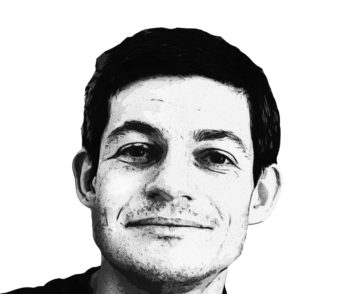
Interviewed by Özden Ocak
Fischer discusses France’s policies on immigration, the political climate after the terrorist attacks in Paris, and the possibility of a far-right victory in the elections.
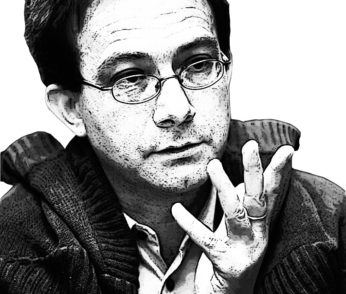
Translated by Ottilie Mulzet
At the time I had no answering machine, so
I couldn’t call myself. Ludicrous, perhaps,
even morbid, how secure it made me feel to know
at any time I could hear my own voice. There is a voice, however
mechanical, which is mine.

By the EuropeNow Editorial Committee
Here are this month’s editor’s picks from Research Editorial Committee members Malcolm Campbell-Verduyn (Political Science), Hélène Ducros (Geography), and Daniela Irrera (International Relations).