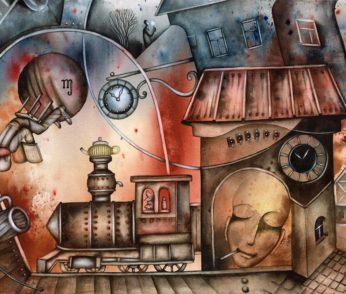
By Emilia Salvanou
This article is based on life stories collected by migrants and refugees that settled in Greece after crossing the Mediterranean Sea.

a journal of research & art
By Emilia Salvanou
This article is based on life stories collected by migrants and refugees that settled in Greece after crossing the Mediterranean Sea.
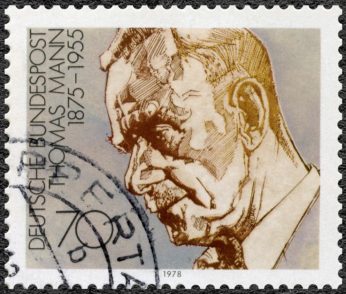
By Morten Høi Jensen
Wary of the youthful temptations of novelty, Mann argued eloquently for a political-spiritual renaissance, a rekindling of faith in the long project of democracy. He reminded his audience that it was “your American statesmen and poets such as Lincoln and Whitman who proclaimed to the world democratic thought and feeling, and the democratic way of life, in imperishable words.”
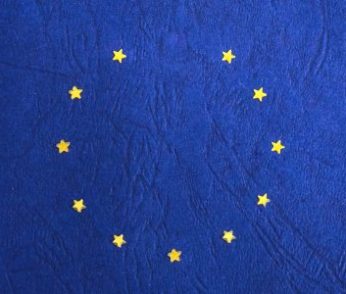
By Roland Benedikter and Ireneusz Pawel Karolewski
The European Union is marking the 60th anniversary of the Treaty of Rome, which was signed on 25 March 1957. But is there a bleak future for the integration process? Roland Benedikter and Ireneusz Pawel Karolewski argue that the EU is in a significantly healthier position than it appears, and that far from grinding to a halt, European integration will continue to be relevant in the coming decades.
Translated by Frederika Randall
He didn’t want to drop dead in that room. In the dark. Alone, without a helping hand: it was pure misery. The sound of his breathing did not seem to be him, but a machine.
Translated by Monika Cassel
The linden tree has lost all its leaves
and nothing is left of the summer but
the wish to stroke old Germany’s
head one more time
Translated by Janet Livingstone
The river draws closer and closer to the stream of gawking people. They jump onto the sandbags so they can see themselves in it. And at night they dream dreams on the shore. Dreams in which clouds of dust whirl behind herds of galloping animals.
Reviewed by Poupeh Missaghi
The narrative is fluid, perhaps to mirror the nature of migration, the movement and the instability; but also because this is how our memories and histories reach us.
Reviewed by Alexander Angelov
As the cultural pendulum moves from one direction to the other, we experience a radicalization of values because the amplification of convictions on one end triggers reactions on the other. Construed as polar opposites in popular imaginaries since the Enlightenment, religion and secularism have generated different anthropologies and modes of being.
Reviewed by Garret J Martin
Geopolitical Constructs challenges our conception of war by emphasizing a number of key and interrelated themes. This includes underlining the ways by which war transforms individuals and places, reshapes interactions between government and businesses, or leads to the creation of new bureaucracies.