All Posts By

EuropeNow

Nationalism, Nativism, and the Revolt Against Globalization

By Manuela AchillesKyrill Kunakhovich, and Nicole Shea

This special issue examines the resurgence of far-right groups, considering how recent events in Charlottesville can illuminate radical movements in Europe. It focuses on three key elements: nationalism, nativism, and the revolt against globalization. Nationalism was the word most associated with the Charlottesville rally, whose participants often called themselves “white nationalists.” By this, they meant that a racialized national identity should be the condition for political belonging.
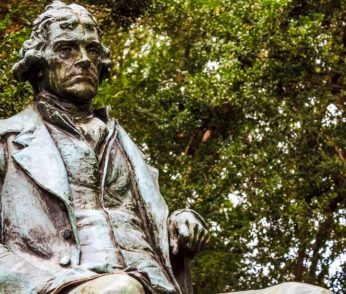
Jefferson’s Two Bodies: Interpretations of a Statue at the University of Virginia

By Isaac Ariail Reed 

On the night of September 12, 2017, a group of students shrouded the statue of Jefferson. They did so in memoriam of Heather Heyer, who was killed a month before by a white supremacist when she was protesting the fascist rally in downtown Charlottesville on August 12. They did so in protest of the university’s paltry response to the violent fascists on its lawn — and at this same statue — on the night of August 11.

Home and (Be)Longing

Curated by Nicole Shea

The perception of a safe home is closely linked with the populist view that women’s “intended role” is at home, as dutiful wife and mother.

The Legacy of the Georgian Revolution

By Eric Lee

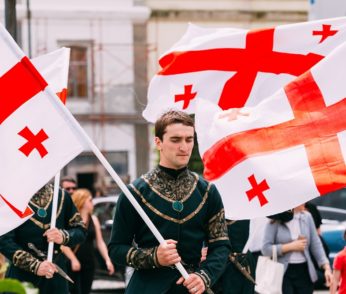
While the Russian Bolsheviks were clamping down on trade unions, which were dismissed by Trotsky as being under the control of “chatterboxes,” in Menshevik-led Georgia they thrived – retaining their independence from the state and winning a constitutional right to strike. They also played a key role in a remarkable institution known as the Wages Board, which consisted of ten representatives each from the employers and trade unions.

A Revelatory Biography: The Genial Genius

By Anne Price-Owen

For over three decades, devotees of the painter-poet David Jones have waited eagerly for the definitive biography and attendant revelations concerning this extraordinary artist and poet, and they have not been disappointed. Thomas Dilworth’s book is a compelling read, and his claim that Jones was the greatest native British Modernist working in twentieth century Britain is convincingly articulated.