By Jun Wei Lee, Notre Dame, Class of 2026
For the village of Les Milles in Aix-en-Provence, France, the question of how to remember World War II is a thorny one.

a journal of research & art
By Jun Wei Lee, Notre Dame, Class of 2026
For the village of Les Milles in Aix-en-Provence, France, the question of how to remember World War II is a thorny one.
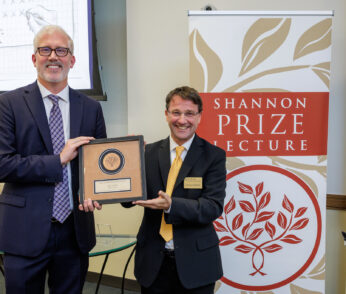
by Rory Finnin, University of Cambridge
In 2024 the Laura Shannon Prize in European Studies offered me something precious and even unexpected: a sense of community. Its greatest reward is a closer relationship with the students and scholars at Notre Dame’s Nanovic Institute.
By Abigail E. Lewis
This campus spotlight features the Nanovic Institute for European Studies at the University of Notre Dame in South Bend, Indiana.

By Cecelia Swartz, University of Notre Dame It is a bright October day on Inishbofin, an island with a population of about 200 off the west coast of County Galway in Ireland, and the community has gathered at the local library branch to celebrate the opening of a new repository housing copies of archival documents. At this launch, copies of historic tax, census, birth, and marriage records are made available for attendees to examine, and

By Alan Matthews
The rightward shift in the center of gravity in the Parliament and Council may favor farm income over environmental objectives.

Curated by Hélène B. Ducros
Stunning artworks trigger a reflection on the implications of biometrics collection for human autonomy and personhood.
By Nicole Scicluna
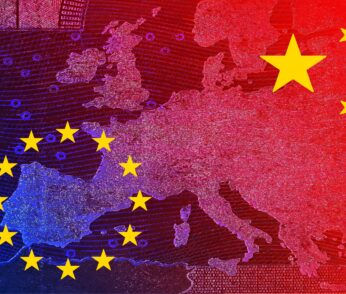
Long dismissed as “second order” elections, of little consequence to Europeans let alone anyone else, the EP elections will play a key role in shaping the EU’s trajectory over the coming years, including in foreign policy.

By Craig Willis and David Smith
In some member states, governance at national or regional levels has already threatened the rights of national and linguistic minorities.
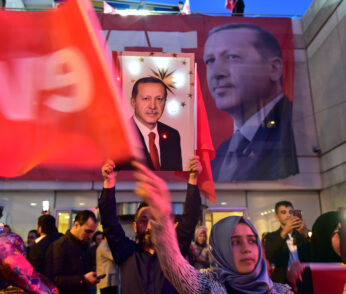
By Metehan Tekinırk and Dylan Irons
The question of how Erdoğan’s immigration and naturalization policies relate to his party’s domestic objectives deserves more attention. We explain the Turkish government’s logic in attempting to absorb a massive immigrant population amidst mounting economic challenges and increasing public opposition. How did Erdoğan-led administrations respond to a mass migration phenomenon that quickly transformed Turkey into a major transit and destination country?