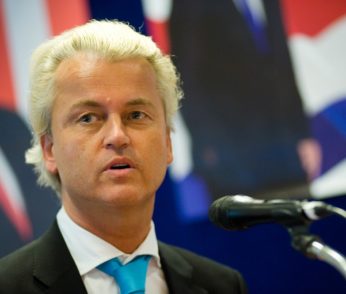
By Jan Willem Duyvendak and Josip Kesic
Wilders has not only dominated the public sphere in the Netherlands for more than fifteen years, but has also become a prominent voice in transnational anti-Islam circles.

a journal of research & art
By Jan Willem Duyvendak and Josip Kesic
Wilders has not only dominated the public sphere in the Netherlands for more than fifteen years, but has also become a prominent voice in transnational anti-Islam circles.
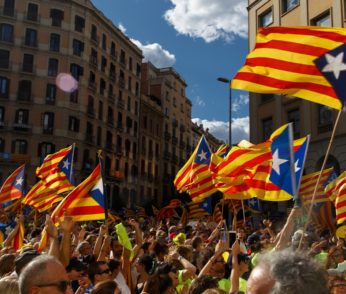
By Juan Andrés García Martín
Since the economic crisis began, Catalan nationalism has abandoned its traditional cooperation with the central government. This radicalization happened under the argument of lack of economic assistance, the impossibility of recognizing of its particularities, and political repression, leading towards a unilateral policy. Moreover, Catalan nationalism identified not only a foreign enemy — Spain — but domestic enemies — those who support unity with Spain.

Translated by Isabel Fargo Cole
Later, to restore the sense of uniqueness, of something transcending the symphony, vocal force and splendid voices were sought after.
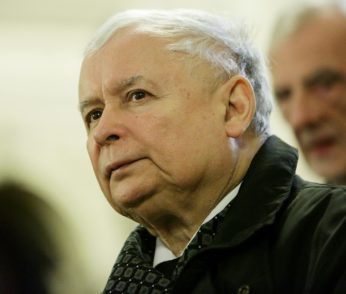
By Agnieszka Pasieka
Among numerous questions that have been posed after recent electoral successes of conservative, right-wing, populist parties at least one seems to be repeated ad nauseam: “Who voted for them?” Whether this question is asked on the occasion of a dinner among friends, an academic conference, or a business meeting, it tends to provoke a somewhat comforting reaction: those who committed “such terrible electoral mistakes” were misled, driven by emotions (usually “anger” and “fear”), and deluded by hopes of economic gains.
By Jonathan Harris
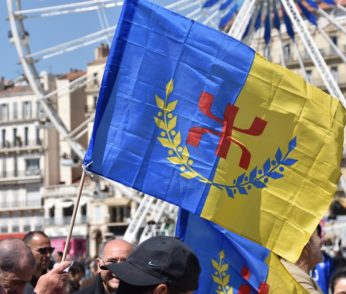
Nativism and nationalist populism, despite Macron’s 2017 victory over the Front National, are a significant part of contemporary French politics. Popular concerns about the weakening power of the nation-state to control the economic and demographic effects of globalization contribute to xenophobic, and particularly Islamophobic, attitudes in broader contemporary French state and society, predominantly directed at France’s large Maghrebi postcolonial diaspora.
By EuropeNow Editors
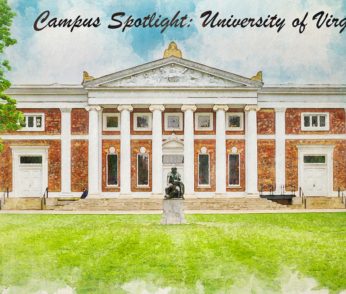
In this issue of EuropeNow Campus, we feature a spotlight on the University of Virginia.

By Jan Čulík
Zeman’s victory is a sign of the emergence of politics of parasitism as a mainstream political strategy within Central Europe in general, and the Czech Republic in particular. Both Miloš Zeman and most Czech politicians have realized that in order to gain substantial political support amongst voters, they no longer need to develop strategies for the solution of many of the existing, often intractable, social problems. The only thing they need to do in order to gain influence and money is to peddle fear.

By Christopher Impiglia
What the alt-right still lacks is a leader that can not only champion many of its ideals and bring them to the forefront of the political debate, but outright embraces it in return; despite flattering calls of “Heil Trump,” at Charlottesville, the president has increasingly distanced himself from the alt-right, most recently by ousting their mouthpiece—Bannon—from the White House, although his policies and consistent, racist comments continue to reveal clear alt-right sympathies.

Interviewed by Sherman Teichman
Liberal democracy has been the bulwark against authoritarianism, ever since the end of World War II.