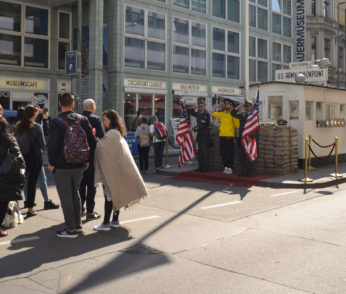
By Christoph Sommer
Amidst the “overtourism” debate going on in Europe, one question pops up routinely. Namely, how much tourism do cities bear?

a journal of research & art
By Christoph Sommer
Amidst the “overtourism” debate going on in Europe, one question pops up routinely. Namely, how much tourism do cities bear?
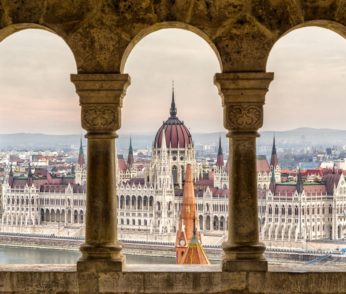
By Cor Wagenaar
Only in the late eighteenth century, curing patients was identified as the primary function of hospitals, and the provision of clean air as the best tool to do so. This view was propagated by medical doctors and produced buildings in which medicine, paradoxically, only played a marginal role.
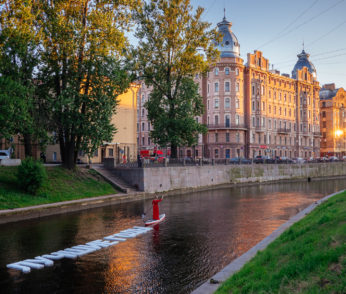
By Lilia Voronkova and Oleg Pachekov
Disappearance of public space in cities due to their privatization and commoditization has become a truism in the twentieth century. What is less discussed is another danger — lack of publics, which leads to the deficiency of demand for public space.
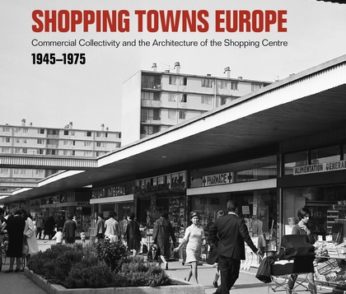
Reviewed by Alejandro J. Gomez-del-Moral
As a history of the beliefs, expectations, motives, and modus operandi of the architects and urban planners who masterminded postwar Europe’s wave of shopping center construction, this volume is superb.
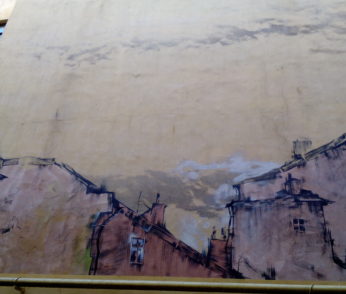
By Eszter Gantner
We consider urban interventions to be practices in which the most diverse participants make their socio-political positions and genuine private interests clear and visible and exert their influence on the public space.
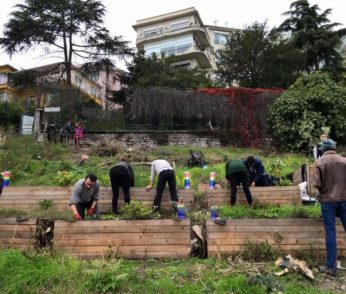
By Ayse Erek
Debates on the shrinking public space in Istanbul are not new. Since the last two decades, they have been crystalized in relation to the topics such as the regeneration of old neighborhoods, protecting heritage, the right for the waterfronts and green spaces, as well as the public but unused spaces, revived with old or new ways of usages.
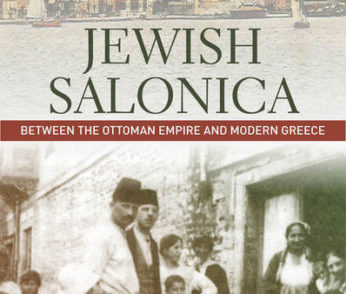
Reviewed by Yaron Ben-Naeh and Tamir Karkason
Jewish Salonica is a cornerstone of Sephardi legacy, without which it is impossible to describe the history of Sephardi Jews after their expulsion from the Iberian Peninsula. Alongside Istanbul, Salonica stands at the center of the study on Ottoman Jewry and the Jewish Sephardi Diaspora.
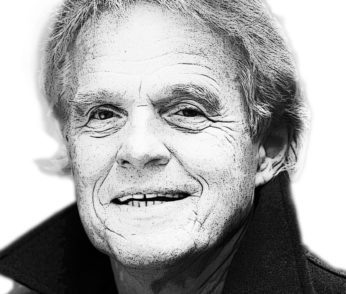
Interviewed by Eszter Gantner
Kaschuba has been addressing key issues of post-modern urban European life for decades.

By the EuropeNow Editorial Committee
Here are this month’s editor’s picks from Research Editorial Committee members Hélène Ducros (Geography), Samantha Lomb (History), and Louie Dean Valencia-García (History).