By Raphaël Liogier
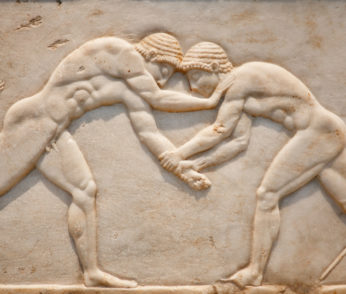
For millennia, human beings have been fascinated by their own tools; and they still are. The question that preoccupies us now, is why anxiety has replaced the original optimism attached to technical objects and activities.

a journal of research & art
By Raphaël Liogier
For millennia, human beings have been fascinated by their own tools; and they still are. The question that preoccupies us now, is why anxiety has replaced the original optimism attached to technical objects and activities.

By Layla Benitez-James
I wanted to unequivocally condemn police violence while simultaneously feeling a knee jerk aversion to any movement working under a shared idea of nationalism.

By Beatrice L. Bridglall
It appears that our ability to moderate anxiety over accelerations in climate change, may hinge on what we believe and how we perceive this issue. Cognitive scientists suggest the value of reframing our mental maps in efforts to process our fears and dilemmas more constructively and positively.

By Ken White
I forget nothing / think of a curse / triple it and still / you’re nowhere near / all braids evenly divided / from earth
By Caitlin Berrigan
Even an entirety must have an edge. Just as the continents drifted before, leaving a line against water: California.
By Bàrbara Roviró and Patricia Martínez-Álvarez
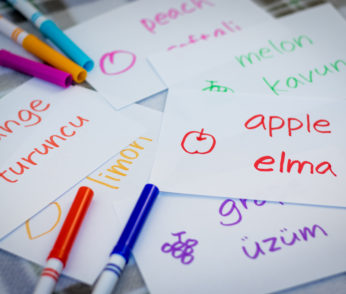
Anxieties related to the parenting experience for migrant families are complicated by multiple factors, some of which are perceived as being life-threatening, and thus, at times, prioritized over any others (e.g., making a living, finding a home, having someone to care for their children, paying their bills, or avoiding police prosecution, among others).
Translated by Christiana Hills
This isn’t exactly how Tristan tells his story to Dumestre. He doesn’t tell him everything. He doesn’t use words like “stammer” or “arrogance.”
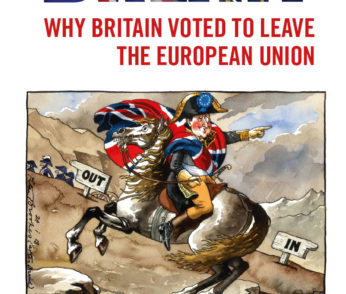
Reviewed by Owen Parker
Brexit was one of the first book-length contributions to this rapidly growing set of stories. Broadly, it is in the camp of those interested in the survey-data-driven “who-voted-what-and-why” question. But unlike many analyses in that camp, it considers the results of the referendum within the broader context of a rigorous and detailed analysis of public opinion during the decade preceding the referendum and of the rise of the UK Independence Party (UKIP), a growing political force, particularly during the latter part of that period.
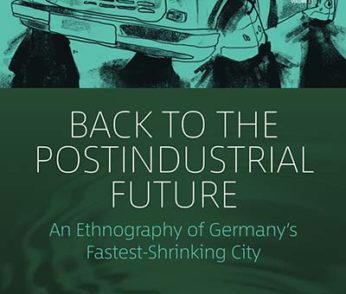
Reviewed by Larissa Stiglich
In 2009, the year after Felix Ringel arrived to conduct his fieldwork in the former socialist model-city, Hoyerswerda received the new, dubious distinction of the fastest-shrinking city in all of Germany.