By Aris Anagnostopoulos
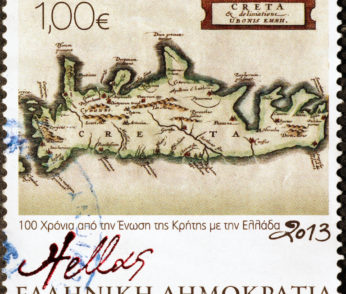
Two young urbanite Herakliots, an architect and a cinematographer, who both hail from highland Crete were deeply engaged in conversation following a recent spate of armed violence in a village back in 2012.

a journal of research & art
By Aris Anagnostopoulos
Two young urbanite Herakliots, an architect and a cinematographer, who both hail from highland Crete were deeply engaged in conversation following a recent spate of armed violence in a village back in 2012.
By Wyn Grant
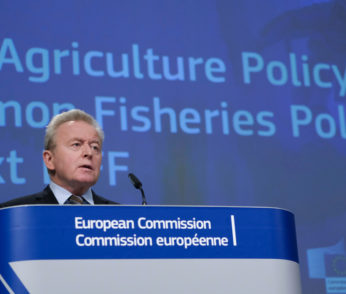
The Common Agricultural Policy (CAP) is the European Union’s (EU) longest lasting policy. It is the policy that has arguably most greatly influenced European farmers’ decisions.
By Marisa Mori
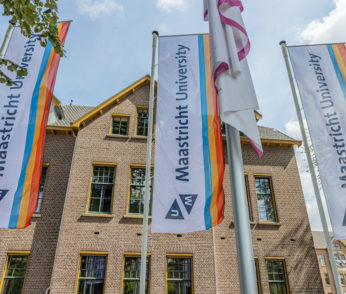
Maastricht University (UM) is well-known for its Problem Based Learning (PBL) education system. Another feature that stands out in the European studies bachelor program is an elaborate skills training trajectory.
By Elizabeth B. Jones
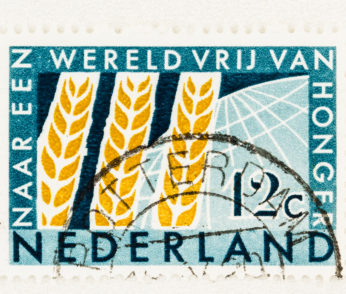
No one knows when the uncertainties of the COVID-19 era will ease into more predictable rhythms. In Europe, as everywhere else, the pandemic has complicated even mundane tasks like grocery shopping.

Interviewed by Eline Schmeets and Akudo McGee
No stranger to crises, tough talks, and collaboration, the European Union is seeing a particularly eventful year. The anticipated economic ramifications of Brexit, troubling developments in Poland and Hungary, and declining relationships with China and the United States were the more predictable issues for 2020.

By Marie Labussière
Interdisciplinarity can be described as “a kind of sequential back-and-forth movement from one discipline to the other.” For this back-and-forth movement to take place between researchers from different disciplines, it seems to me that there are some basic prerequisites.

Interviewed by Hélène B. Ducros
Ralph Lister is a man with a passion: to bring creative Europe beyond its usual metropolitan frontiers.
By Kirstin Herbst
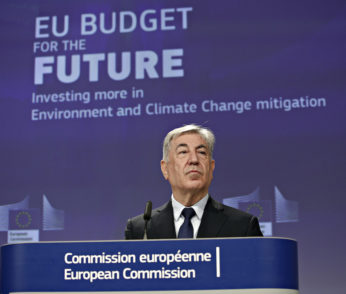
Scholars in the field of international politics often point to climate change as an example of a problem more efficiently solved by delegating authority to international institutions.
By Johanna Hvalić
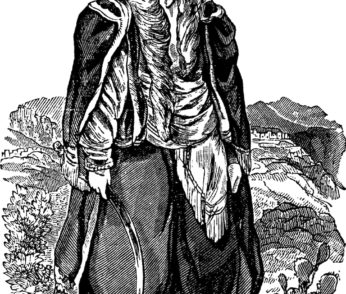
Women’s agency in British imperialism has often been neglected in the writing of history. Their experience, roles, and identities are often dominated by male perspectives, resulting in stereotypical representation as eroticized indigenous women and white “Memsahibs” following their husbands.