By the EuropeNow Editorial Committee
Here is this month’s editor’s pick from Research Editorial Committee members Hélène B. Ducros and Nick Ostrum.

a journal of research & art
By the EuropeNow Editorial Committee
Here is this month’s editor’s pick from Research Editorial Committee members Hélène B. Ducros and Nick Ostrum.

By Esther Liberman Cuenca
Our goal this semester is to understand how people in the pre-modern world (that is, prior to 1800), particularly in Europe, discussed, reacted, and tried to remedy contagious diseases before the advent of modern medicine and scientific understandings of immunology and virology.
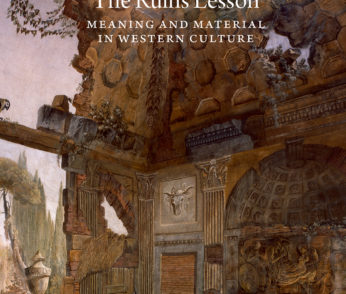
Reviewed by Tanvi Solanki
In today’s Europe, ruins present themselves both as timely and untimely. In cultural discourse, as materials, they are often associated with quaint tourist attractions. As metaphor and process, however, they are timelier than ever before.

By Hélène Ducros
EuropeNow features a selection of scholarly articles and books on topics pertinent to the teaching of Europe or teaching in Europe that were published within the last 5 years.

Interviewed by Hélène B. Ducros
The history of eugenics intersects the history of racism from its inception. Most eugenicists, particularly the “founders” of the eugenic movements across the world, from England to Greece, and from Romania to the US, were also supporters of racial ideas of white/European superiority.
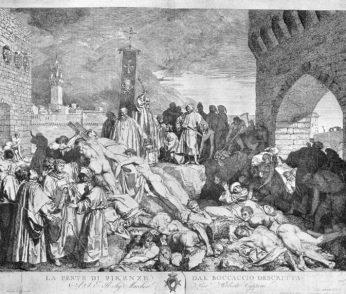
By Eugene Smelyansky
“It is a matter of humanity to show compassion for those who suffer,” opens Giovanni Boccaccio in the prologue to The Decameron. The prologue, and especially the first chapter of Boccaccio’s mid-fourteenth-century masterpiece, are well known to anyone who studies or teaches medieval history or literature.

By Judith Schalansky
In the evening they are hungry and restless. No meat for days. No hunting since they themselves were captured. Instincts worn down by captivity until they lie bare like gnawed bones.

By Carol Anderson
An advantage to teaching a medieval and early modern Western history survey course during a worldwide pandemic is that there is a corresponding historical event that is comparable to the present situation that furnishes a useful exercise for reflection on the human condition.
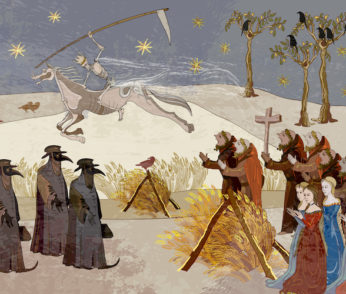
By Maria Americo
The pandemic had disastrous effects on New Jersey, a state hit hard early on in the crisis. Saint Peter’s University is a small, tight-knit Jesuit university in Jersey City, the second-most diverse city in the United States, catering to a demographic of mostly students of color.