All Posts By

EuropeNow

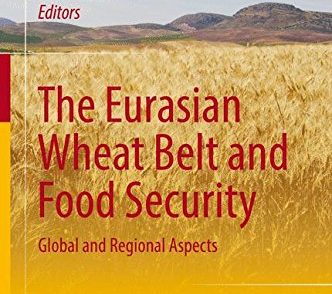
The Eurasian Wheat Belt and Food Security: Global and Regional Aspects by Sergio Gomez y Paloma,‎ Sébastien Mary, and Stephen Langrell

Reviewed by Judith Pallot

The problem of global food security was brought into sharp relief in 2008-2011 in food riots in the global south and the Arab Spring. These crises witnessed a sharpening of debate about how to feed the world. Advocates of the traditional food security approach maintain that the answer lies in “aid and trade” based on the world-price-governed staple food circuits that emerged in the twentieth century, and large-scale, high external-input corporate farms.

Diversity, Security, Mobility: Challenges for Eastern Europe

By Nicole Shea and Peter Haslinger

In this special anniversary edition of EuropeNow, curators Peter Haslinger and Nicole Shea highlight the importance in research and culture of smaller central and eastern European regions. The research presented here assesses the concepts, paradigms, and methods for the re-evaluation of multi-ethnicity, diversity, and mobility in a globalized and “post-factual” era, and seeks to identify factors and agencies that help to explain the current trends towards the obsession with security agendas.

You’ll Be Me by Neđla Ćemanović

By Neđla Ćemanović

My cousin promised me a job in Austria. At the moment he told me he had managed to sort something out, I was glaring at a wall plastered with posters of nature, some of them faded and some coffeestained. The entire apartment was begrimed with the previous tenants’ addictions—from caffeine to domestic violence.

Russia’s ‘Myth’ of Equality in a Securitized Context

By Federica Prina

Russia is an exceptionally vast and heterogeneous country with high levels of ethnic, linguistic, and religious diversity, and a complex federal structure. The Russian empire already saw an intermingling of peoples, encompassing Slavic, Scandinavian, and Asiatic groups, with various forms of hybridization, multilingualism, and cultural cross-fertilization.

Securitizing the Unknown Borderlands: Czechoslovak Subcarpathian Rus and Its Minorities

By Sebastian Paul

The Subcarpathian Rus is still a region for specialists. For hundreds of years, together with Slovakia, the territory of later Subcarpathian Rus embodied the northeastern part of the Kingdom of Hungary. Until 1918, it was the neighboring region to Habsburg Galicia, and in the Interwar Period, it formed Czechoslovakia’s eastern borderland to the reestablished Polish state.

Yankee Messiah by Suzanne Mozes

By Suzanne Mozes

Ignorance and apathy have no boundaries,” David said. I raised the half-empty bottle of Evan Williams. He nodded at it but refused my boyfriend’s invitation to stay for dinner, saying he would “leave with this one last thing so y’all can eat.”